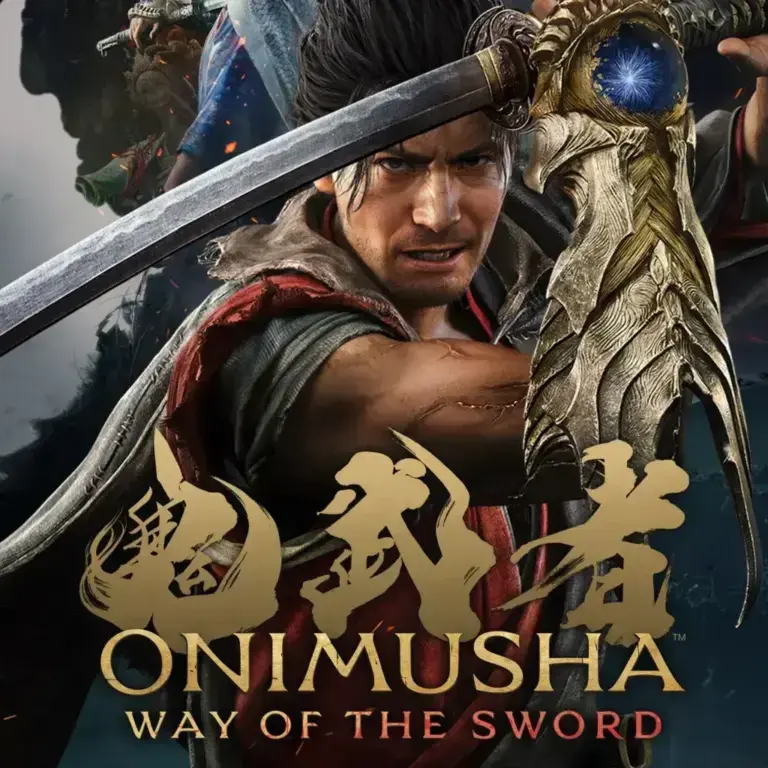

I spent most of 2001 trying to steer Samanosuke Akechi through pre-rendered feudal castles using controls that made him move like an industrial forklift stranded on black ice. Back then, we tolerated fixed camera angles and clunky directional inputs because sucked up demon souls looked cool on a cathode-ray television. Twenty-odd years later, Capcom has finally dragged Onimusha out of cold storage, melted off the PS2 nostalgia, and replaced it with a combat system so tight and unforgiving that my left trigger finger is currently suffering from structural fatigue. Onimusha: Way of the Sword isn’t a cautious nostalgia bait job. It’s Capcom taking Sekiro’s parry fetish, Nioh’s stance toggles, and Devil May Cry’s total disregard for physical safety, shoving them into a blender, and forcing you to drink the results at high framerates. It is a brilliant, hyper-demanding action game, even if its main character has the charisma of a damp piece of drywall and its plot exists entirely to shuttle you between different dark caves full of angry crabs.
Miyamoto Musashi, as historical legend would wildly oversimplify, supposedly dispatched his bitter rival Sasaki Ganryu with a single, unceremonious strike using an oar he carved into a wooden sword on his way to their fateful duel. It’s a modest anecdote that completely ignores the far more thrilling, Capcom-endorsed reality: Musashi actually parried a dozens strong flurry of razor-sharp steel, softened up his opponent with a flurry of lightning-fast reflex combos, and then impaled him with a demonic soul-stealing spear forged in the fiery depths of the Japanese underworld. If that sounds unhinged, that’s because Way of the Sword marks a swaggering return for a franchise that Capcom left lying dormant for two entire decades. In an era where virtually every action game wants to bow down before the altar of FromSoftware’s strict Dark Souls template, the devs stepped back into the arena to deliver a masterclass in genuine weight-driven character action.
Right after you step into the shoes of the samurai hero and draw your blade against the first wave of demonic Genma forces, you realize that Capcom has no interest in creating a passive cinematic experience where holding down a single button produces a ballet of blood and severed limbs. You are forced to continuously manage every single step, swing, stance, and animation in an intense dance of death where a single miscalculated press will result in your immediate and embarrassing demise.
Malice in Feudal Kyoto
Setting its sights on Edo-period Japan, Way of the Sword casts you as a young, headstrong, and very arrogant Miyamoto Musashi. Before he becomes the legendary, wise swordsman history remembers, he is just an insufferably skilled vagabond wandering the countryside, picking fights with local martial arts schools only to prove he’s the baddest of all. Naturally, his winning streak gets cut short when demonic entities known as the Genma crash a duel, slaughter his opponent, and leave Musashi lying dead in his own blood.

Instead of slipping into the void, Musashi finds his soul pulled back from the abyss by a mysterious old man who forcibly fuses an Oni Gauntlet to his wrist. The gauntlet keeps him alive, but it absorbs the souls of fallen Genma to power its user—a supernatural parasite that Musashi openly despises because he resents having to rely on borrowed demonic power rather than his own honed steel. Joined by Shizuka—the sharp-tongued spirit residing within the gauntlet—Musashi sets off to stem the tide of Malice corrupting Kyoto that puts him on a collision course with demonic warlords and his resurrected rival, Ganryu, who received a gauntlet of his own and embraced its dark appetites without a second thought.
Musashi is an utterly lovable protagonist, a bit of a bumbling fool in every regard except his swordsmanship, but a kind soul who groans and complains every time someone asks him for help.
Capcom’s digital resurrection of the late, great Toshiro Mifune to model Musashi’s face and physical presence is nothing short of incredible. Where similar tech attempts feel like uncanny Valley horrors, Capcom used the RE Engine to capture Mifune’s famous mannerisms—the furrowed brow, the cocky smirk, and the iconic habit of scratching the back of his neck when exasperated—with fine warmth and cinematic style.
The Kinetic Ballet of Steel-on-Steel
Let’s skip the marketing speak and talk about what happens moment-to-moment when you draw your sword: Onimusha: Way of the Sword features some of the most satisfying, visceral dual action I’ve seen in the last decade. Instead of overwhelming you with finger-contorting command lists right out of the gate, the game keeps Musashi’s core inputs very clean. You have light attacks, slow two-handed heavy slashes, a dodge, a block, and a ranged bow. The trick is how these basics meet enemy attacks in real time, creating a tight rhythm of parries, stance breaks, and counter strikes.

Every defensive decision you make in a fraction of a second carries tactical weight. Blocking should be your last resort because enemy heavy strikes will crush your guard in no time and leave you wide open to heavy punishes. Parry builds up your “Blazing Gauge,” sets your katana alight with visual flare, and improves your offensive output. When you have to deal with a hulking, heavily armored creature, a simple parry won’t cut it—you need to use the Deflect technique to chip away at their stamina gauge until their guard shatters completely, opening them up for Break Issen execution. Meanwhile, unarmed sweeps and grab attacks cannot be parried at all, forcing you to use Reflex Dodges to slow down time and deliver strong follow-up strikes.
Combat sounds simple enough: time your parries to charge up your blade, use deflects to break their guard, and land a powerful critical hit. But actually pulling that off while an enemy is swinging at your face is easier said than done.
The very pinnacle of this defensive dance is the return of the legendary Issen Counter. If you hit the attack button at the exact, razor-thin margin before an enemy weapon hits Musashi, he side steps with blinding speed, leaving a trail of sparks as he slices straight through the target. The timing window is brutally unforgiving, and if you miss it, you’ll take a massive chunk of damage to the face. But when you lock into that flow and chain three Issens in combo through an enemy group, it triggers an adrenaline rush that few action games can match.
Boss Battles Worth Screaming About
While basic Genma encounters make you feel like a total badass, the boss fights throw down the gauntlet with unrelenting intensity. These aren’t just damage-sponge slogs; they’re intense, masterfully crafted duels that force you to bring out every trick up your sleeves. Take multi-stage encounters against Sasaki Ganryu, or big, grotesque abominations like the Greater Nue and Benkei. The sheer kinetic choreography of these fights is breathtaking. In one late-game encounter, the boss threw out lightning orbs at me that forced me to switch between jumping, dodging AoE blasts, and perfect parries on weapon strikes, all while I was desperately trying to avoid getting my soul ripped out.

That soul-stealing mechanic is where the game’s risk reward dynamic shifts into evil mode. When you crack a boss’s guard or land a heavy blow, souls fly out into the arena. Yellow souls restore your health, blue souls charge your destructive Oni Armaments (like a spear that summons tornados or dual hammers that shatter armor), and red souls serve as currency. If you get greedy and try to absorb these souls in the middle of a combo, you are at risk of getting caught off-guard by a counterattack. Even worse, if you leave orbs floating in the air for too long, the boss can siphon them up themselves, healing their health bar or triggering a feral rage mode with completely new attack patterns. It forces you to maintain an aggressive, relentless pressure that keeps your heart pounding in your chest.
When blades cross, you either mash the attack to overpower the enemy or you get locked in a quick trade of light and heavy hits until you outmaneuver them and deliver a vicious blow.
Bloat in the Capital
If Onimusha: Way of the Sword were a tight, 12 to 15 hour linear action ride, it would be an undisputed, flawless classic. Unfortunately, Capcom succumbed to the modern gaming impulse to pad out runtime, stretching what should have been a brisk sprint into a 25-35 hour campaign by forcing you into a massive, open world in Kyoto.
The hub itself isn’t completely devoid of charm, but its muddy, overcast, grey-brown streets start to blur together very fast. You spend hours running back and forth across these alleys, picking up endless piles of leather, iron, and upgrade materials only to level your gear stats up by 2% at a time. Worse still, the game regularly recycles mid-tier minibosses like Byakue, an axe-wielding demon covered in paper talismans that force you to fight almost the same variations of the same enemy a half-dozen times across side quests. Even Musashi starts groaning in cutscenes whenever he has to battle someone he’s already thoroughly beaten.
Kyoto mostly exists as a vessel for upgrade materials scattered in plain sight.
Fortunately, the hub is partially saved by a certain set of side activities called Curious Cases or Mysteries of Kyoto. Delivered by Lady Murasaki—a fictionalized version of the real-world 11th-century novelist—these missions dive deep into scary, dark, and morbidly funny Japanese tales. You might investigate a village where a man believes he’s been blessed with divine immortality, or help a distraught child searching for a father lost to vengeance. Each story ends with Murasaki penning the tale into her manuscripts, offering fantastic world building that elevates the game from a simple monster-slashing fest to a moody, atmospheric historical drama.
Technical Performance and Visual Presentation
Capcom’s RE Engine is firing on all cylinders here. The game runs butter-smooth on modern PCs, easily pushing past 120 FPS at high settings with FSR enabled. Even when the screen gets completely flooded with demonic sparks, soul orbs, and lighting effects, the performance stays rock-solid. Aside from a few tiny hiccups during cutscene transitions, it’s a masterclass in optimization.

The character models, monster designs, and blood-soaked execution animations are nothing short of incredible. Slicing an enemy in half reveals detailed, anime-style physics cutlines, while the environmental destructibility, like smashing opponents through wooden carts or using physics-driven lanterns to create flaming whirlwinds with your Oni weapons, gives combat a grounded presence. Honestly, it makes me wish the rest of Kyoto had as much personality and color as the later mountain fortresses and the crimson-hued bamboo groves.
Verdict
Onimusha: Way of the Sword is a triumphant and thunderous comeback for a series that action fans had all but given up on seeing again. Instead of just copying the usual Soulslike trends, Capcom modernized their own unique style of swordplay that’s super tight, rewarding, and just looks cool as hell. Sure, the game gets a little bogged down by too much busywork with crafting and recycled minibosses in the open world, but the boss fights are intense, the atmosphere is top-notch, and nothing beats the rush of landing a perfect Issen counter. If this is the new foundation for the franchise, the future of character action is in exceptionally good hands.