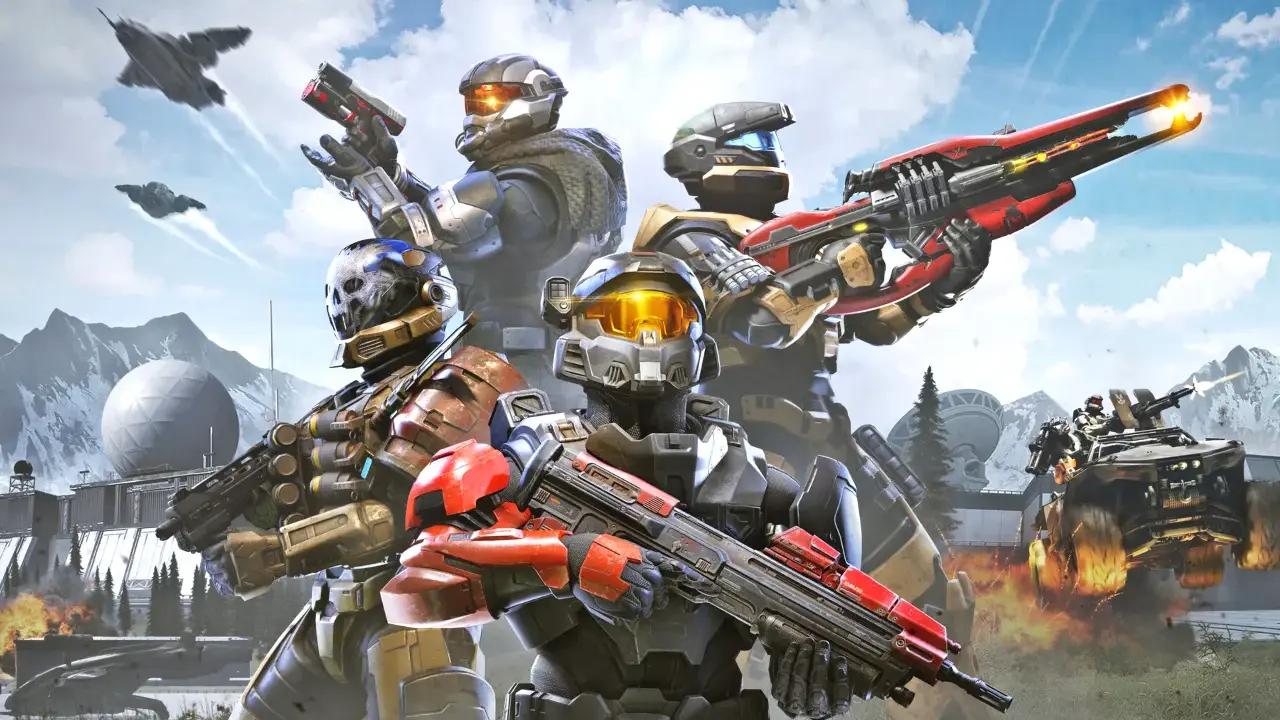
Halo Infinite’s multiplayer is two games stapled together. One is a superb, bouncy, grenade-flinging arena shooter that made me giggle like a teenager who’d just found out about the splash damage on a Warthog. The other is a monetization spreadsheet that happens to render in 3D. Both arrive in the same free download, and your enjoyment depends on how much time you spend with each. Microsoft released Halo Infinite on PC and Xbox in November 2021, weeks ahead of the campaign, with no entry fee and a plan to treat it as a service. The timing was almost suspiciously good. Call of Duty was serving its annual reheated leftovers and Battlefield 2042 was face down in a ditch, so a Halo that simply worked, with no server meltdown and no launch week apology tour, looked like a miracle. I launched it expecting to be charitable, though I left having lost an alarming number of evenings to Big Team Battle.
The Gunfight
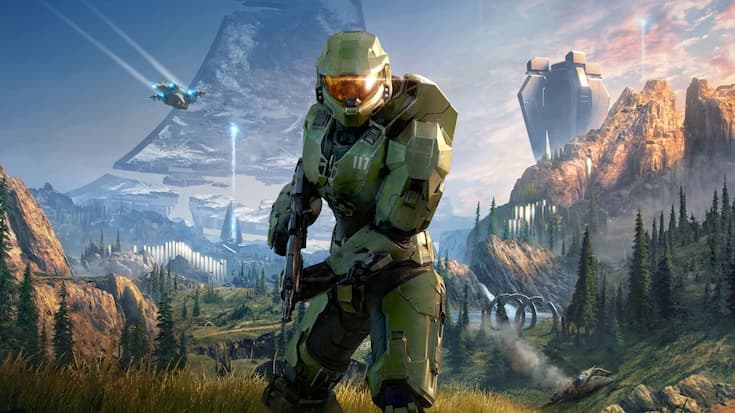
Everything good about this game starts with how a fight unfolds. Since every Spartan has a rechargeable shield, each duel basically has two acts. In the first, you’re armored and can afford to be clever, but once the shield pops, you’re one mistake away from respawning, and the whole dynamic shifts. Unlike a lot of modern shooters where getting caught from behind like in Call of Duty means you’re a corpse with a kill-cam, Halo Infinite gives you a fighting chance. You can strafe, slide, jump, drag them around a pillar, and sometimes win out of sheer spite. The time-to-kill is honestly perfect that makes fights feel more like intense arguments than quick ambushes, and I mean that as the highest praise.
It also takes some adjusting. My first few matches had me unloading half an assault rifle magazine into a Spartan who just declined to die, and I took it personally. Once your brain recalibrates, you will stop picking fights with two people at once, because that’s where this game punishes your ego. It’s a team shooter that doesn’t mind you being a hero, but it just wants you to be a hero standing next to three other people.
The weapons are mostly a joy, with a few exceptions. The assault rifle is the best it has ever been in the series, a bit like being the tallest kid at a primary school, but it really destroys shields. The Sidekick pistol is arguably better, which is bonkers when you think about it: a sidearm elbowing the big chunky rifle out of the way. The Mangler is a smug revolver that rewards patience, the Bulldog is a tidy shotgun, and the Needler still produces the single most satisfying delayed explosion in gaming. On the other side, the Plasma Pistol has been nerfed into a decorative item, the Ravager spits red goo at nobody in particular, and the Commando probably should drop people and instead tickle them. The Skewer is a ridiculous harpoon launcher that I will defend to the death, and the Shock Rifle is a nasty piece of work. The Energy Sword is the one thing I’d take away from the room, because in competent hands it has so many lunges left that it clears a corridor like a particularly angry lawnmower.
Toys, Tricks and Tactical Idiocy
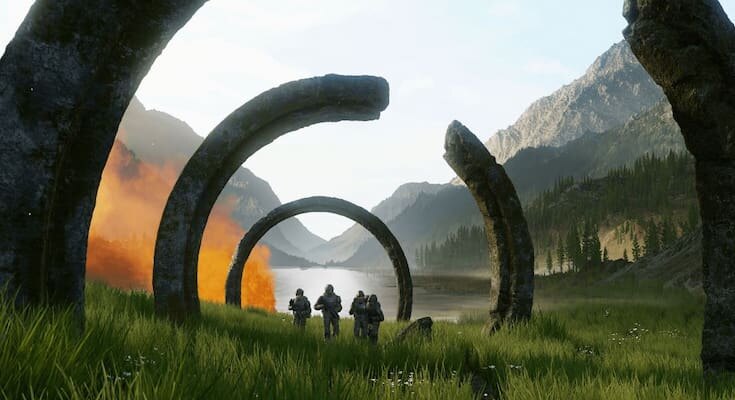
The gadgets are where Infinite earns its keep. The grappling hook is the best thing 343 added, and I don’t think it’s close. It turns a ground bound space marine into an overconfident spider with which you can yank yourself onto rooftops, snatch a weapon off the floor from across the map, hijack a vehicle mid-leap, or reel yourself toward an enemy and elbow them in the back of the head. After a few weeks, I honestly couldn’t picture the series without it. The repulsor is a close second, a shockwave that deflects grenades, shoves people off cliffs, and flings vehicles into the faces of the people who were about to enjoy them. The thruster, drop wall and active camo round out a toolbox where everything has a use, even if the drop wall mostly makes me feel like a very polite grenade magnet.
The radar is also shrunk to a small bubble, so sneaking around is viable again. Sprinting or firing pings you, but only if someone’s practically breathing on you, so flanking is a real thing here.
Not everything is shining. Infinite uses soft collision, meaning Spartans can slide through each other like ghosts at a bad party. That kills door blocking griefers, which I applaud, but it also turns melee into a coin toss. I’ve had my fist land square on a helmet and register nothing. I’ve also been backsmacked by someone who was clipping through my torso at the time. The sound design is mostly great, and you can identify most weapons by ear alone, but a seven-foot tank in power armor somehow sneaks up behind me with all the acoustic presence of a houseplant. The ping system is also a miss. It’s a good idea attached to a clumsy implementation, but it doesn’t tell your teammates whether you mean “go here” or “please defend this,” and nobody uses it anyway.
Modes and Maps
The 4v4 playlist offers Slayer, Capture the Flag, Strongholds and Oddball, plus Total Control and Stockpile floating around the edges. There’s also a one-flag variant on Launch Site that turns into a vehicular riot, which is the silliest and most fun thing in the 4v4 rotation. None of this reinvents anything, and it doesn’t need to. These are the same modes that have been making people yell at their friends for twenty years, now running on far better hardware.
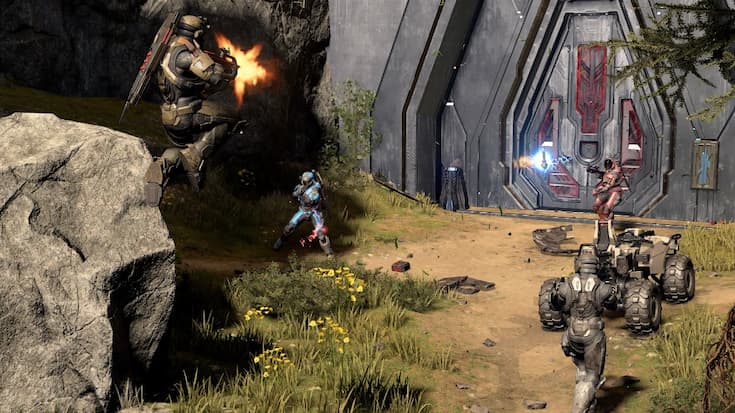
The maps are the back of the stage star, at least the good ones. On first look at streets, you might think someone poured neon into a wet car park and then made it playable. Bazaar and Recharge deliver chaotic central spaces with calm rims for the cowardly, and Fragmentation is two bases staring at each other down a canyon, which is the Halo equivalent of a warm bath. Highpower is not so beloved, and I was groaning when it loaded. In Big Team Battle, the three launch maps give you tanks, snipers, aircraft, and general carnage without becoming a wandering simulator. Vehicle spawns are mirrored, and the power weapons can be somewhere in the middle of the map, so nothing is rigged. I also had no spawn-camping problems, which after a season of other shooters felt like winning a small lottery.
Community mood on this has soured since, though. Players on Reddit complain about “three-lane” layouts, ugly lighting on some later Forge built maps, and spawns that drop you in front of a bunch of angry strangers. That last complaint lines up with my experience, as I faced the odd dumb spawn, and it’s always when you’re trying to look cool.
The big launch problem was that you couldn’t choose your mode. Everything was mashed together in one playlist, so a lot of Capture the Flag matches were filled with people hoping it was Slayer. I have personally watched a teammate run past a free flag to chase a kill. Playlists were added later, which helps, and by mid-2022 there were thirteen modes to pick from. But the gaps in the lineup (Infection, Elimination, anything resembling Warzone) were left behind, and fans still waited on Forge months after launch.
The Progression Problem
Now for the bit that made me want to throw a Fusion Coil at somebody. Infinite’s battle pass is very unusual in one respect: it doesn’t expire, so you can finish it at your own pace without FOMO breathing down your neck. That’s the single nice thing I can say about it.
At first, leveling up was a total drag because it relied almost entirely on grinding out random, annoying challenges like getting kills with a specific pistol or playing a certain mode that the matchmaker declined to hand you. 343 later added a flat chunk of XP for finishing matches, but your actual performance still doesn’t matter. You could carry your whole team to a win and top the leaderboard, only to get the same measly reward as someone who spent the full match AFK. That’s bad design for a team game, because it rewards you for farming instead of winning. Further, the rewards are lackluster; the early battle pass tiers are just filled with boring shades of grey and blue, which feels about as exciting as getting a boring sweater for Christmas.
Seasons are also six months long, and a dedicated player can burn through the pass well before the end. That leaves months where you’re playing a game that has nothing left to give you. For a live-service title, that’s an odd way to keep people logging in.
Customization is the bigger crime. Armor pieces are locked into “cores,” so there’s no chance you can build the Spartan of your dreams. You find a shoulder pad you love, and it refuses to mix with the helmet you like. Colors are also restricted, and certain store purchases are locked to one specific outfit. I’d love to know why the bots can mix and match pieces freely while the rest of us can’t. Then there’s the pricing: roughly a tenner for the premium pass, fiver bundles every day, and twenty-buck bundles on a weekly rotation. Some players found that fair for a free to play game, but I think it’s fine in the abstract and irritating in practice, since the store credits system conveniently never matches the cost of what you actually want. And there are no proper career stats, custom games with stripped-down options, and no map voting or lobby system, so every match ends with a trip back to the queue.
Verdict
Halo Infinite Multiplayer is a terrific shooter attached to a shaky service. The moment-to-moment is some of the best the genre has offered in years, with long, readable gunfights, a grappling hook that makes you clever, grenade throws that reward geometry, and vehicles that cause delightful chaos. If you can ignore the battle pass, shrug at the store, and accept grey armor pieces, it’s the best free thing you can put on a hard drive. If you need a stream of new toys and a fast-moving progression loop to stay interested, you’ll find the cupboard thinner than it should be. I’m giving it an 8. It would be a 9 if the studio had treated the surrounding systems with half the care they gave the gunplay.