There’s a particular kind of detective game that treats you like a toddler on a leash. A glowing marker appears, you walk to it, a cutscene announces the answer, and you nod like you personally cracked the case. I’ve played a lot of these, and I’ve come out the other end feeling less like a sleuth and more like a very well-dressed delivery driver. Sherlock Holmes Chapter One is the rare one that lets go of the leash, and then occasionally forgets to tell you where the park is. That’s the whole game in a sentence: brilliant when it trusts you, maddening when it trusts you a bit too much, and wrapped in an open world that looks lovely and does approximately nothing.
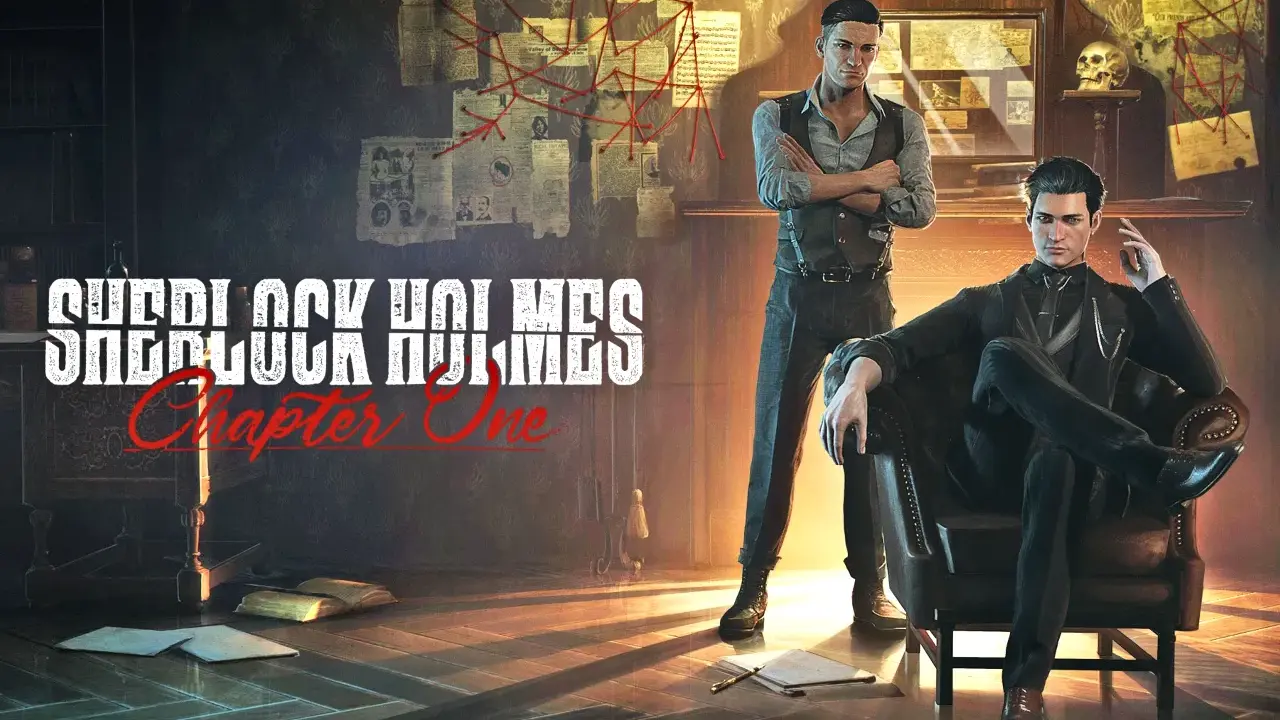
Frogwares, the Ukrainian studio behind a long run of Holmes adventures, has swapped the fog and cobblestones of Victorian London for the sun-baked Mediterranean island of Cordona. It’s a fictional place, all whitewashed terraces, harbour views and cathedral spires, and it’s where a young Sherlock, still in his twenties and still a few years from Baker Street, has come home to visit his mother’s grave. Within about five minutes of arriving, he discovers that there’s more to it in her death than meets the eye. So begins a mystery that sprawls across the island, and a game that is by turns one of the smartest deduction sims I’ve played in years and a slightly dazed tourist trap.

Let’s deal with the origin-story problem first, because it’s the thing that nagged me longest. This Sherlock is sold as a novice, a green private eye finding his feet. Then he glances at a stranger and reads their whole life story off a frayed cuff and some under-eye bags, and you realise he’s a fully assembled detective who just happens to be wearing a younger man’s face. There’s no growth curve here. No stumbling first case or gradual honing of the craft. Chapter One never really convinces you the events of its story lead to the man he becomes, aside from a few late scenes that tug at the thread. If you were hoping for a Holmes who earns his powers, you’ll be waiting a while.
And yet I found him weirdly endearing anyway. He’s clipped, impatient, a touch snippy, but an actual human is being under the smugness, which is more than you can say for most screen versions of the guy, who tend to behave like a weather system with a violin. Part of the credit goes to the sidekick situation. Watson is nowhere to be found (presumably off soldiering somewhere), so Sherlock is accompanied by Jon, an imaginary friend who’s been living in his head since his father died. Jon is cheeky, sparky, and refreshingly unimpressed. He calls Sherlock “Sherry”, which I’m pretty sure no Doyle purist ever intended, and he’s more than happy to puncture the great detective’s ego whenever it starts inflating. Watching Holmes bounce off someone who isn’t consistently gasping at his brilliance is a treat. It gives the game a lighter, more playful pulse, which it badly needs given how grim some of the cases get.
The actual detective work is the good stuff.
Every case in Chapter One follows a loop you’ll recognize if you’ve played earlier Frogwares outings, only sharper and, crucially, less spoon-fed. You comb a crime scene, pick up clues, question suspects, and retreat into Sherlock’s Mind Palace to knit it all together. Concentration mode works somehow like the detective vision in the Arkham games, highlighting things a typical person would miss, though I’ll admit it’s mostly a fancy way of following footprints. Then there’s the reconstruction, where you shuffle ghostly figures around a scene to recreate what really happened. If that sounds like Return of the Obra Dinn, you’re right, and it’s the highest compliment I can pay a deduction mechanic. When it clicks, when you slot the last figure into place, and the timeline snaps into focus, it’s a proper hit of smugness.
What sells it is the legwork. Chasing a lead here doesn’t mean tailing a quest marker across the map like a bloodhound with a GPS. You go through newspaper archives and police records to dig up a name, eavesdrop on conversations and fish the useful keywords out of the noise, and even disguise yourself to get in the door, and I mean actually need to: the sozzled regulars at the Drinking Dutchman won’t tell you a thing until you turn into a sailor. Sometimes you’re provided with a street name and nothing else, and it’s on you to work out where the hell it is. You get it wrong, you wander somewhere pointless, and the game doesn’t tut at you.
Cases can also end messily. There are multiple solutions, and plenty of them come with moral static. Is someone guilty if they acted in self-defence? Do you drag a corrupt figure to justice if freeing them might do more good elsewhere? You can even pin the crime on the wrong person, and the game won’t ring a bell or flash a “case closed” banner to tell you. You just live with your decision. Some players will find that deflating, since we’re all trained to expect the gold star at the end of a puzzle, which I found oddly grown-up. Real crimes don’t earn you completion certificates, and I’d rather be trusted than patted on the head.
The flip side of all that freedom is that the game occasionally misplaces the map to its own logic. I’ve seen accounts of a case that asked the player to locate a pregnant refugee using nothing but a photograph, which meant flashing it at strangers for around twenty minutes until one finally happened to know something. Another had an infiltration attempt stall because a doorman kept calling a filthy, bedraggled Sherlock “moneybags” regardless of how badly the disguise was dressed down. There’s also some UI clutter where red symbols on clues tell you there’s more to extract, but you’ll probably need to keep flipping back to the “how to play” section to remember what they mean, and certain clues won’t appear until you’ve manually pinned them, which feels like forced paperwork. This is where Jon should have had a hint system, but instead his diary scolds you for getting things wrong, without ever suggesting what might be right, and the entries repeat so often that skimming them is no different than reading the same passive-aggressive sticky note over and over.
Cordona: gorgeous, and about as busy as a Sunday in a ghost town
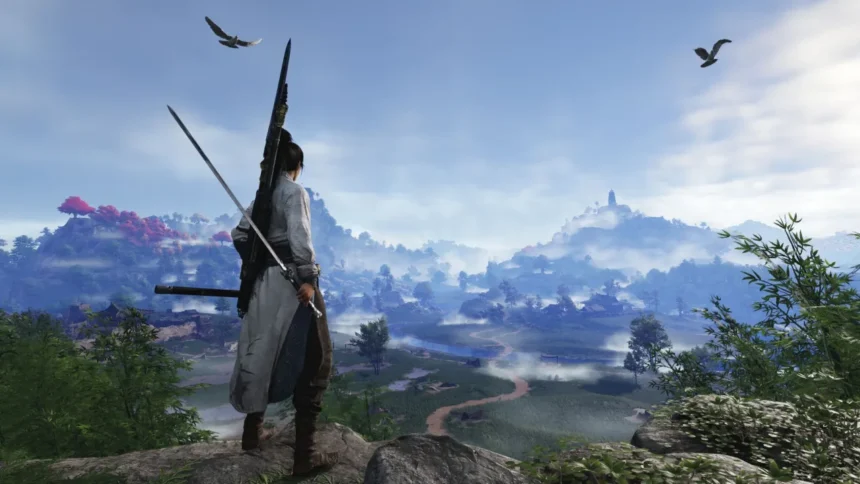
The open world is the big new swing for the series, and it’s where my feelings get complicated. On the surface, Cordona is a treat. It’s split into five districts, and the colonial tension baked into them is interesting: British residents in grand mansions draped with flags, while the locals are packed into cramped quarters, hawking goods in busy markets and grinding away in the mines and factories. The place has good texture. It looks like somewhere with history, and I’ll happily concede that some of the harbour and cathedral vistas are postcard worthy.

But you can’t actually do much in it. Between the points where the story wants you, there’s very little. You will be told where to be and, more importantly, when, and turning up early is usually just a waste of daylight. Wander off the beaten path and the streets feel thin and underpopulated, like a film set where the extras are on lunch. The same handful of NPC models keep cycling past, from a preening British dandy to a bloke who is, let’s say, permanently occupied against a wall, and that makes finding a witness in a crowd more confusing than it ought to be. I leaned on fast travel more than I’d planned, and once I did, the open world was different from the old “pick a location from a menu” structure. It’s closer to LA Noire than it is to Assassin’s Creed, in that the city exists as an elaborate stage for your cases.
The world’s best trick is the way side cases find you. You’ll catch two strangers muttering about a violinist’s recent misfortune, or spot a poster advertising ghost removal, and will suddenly be pulled into something properly fleshed out. Some of these are nearly as well built as the main plot. I chased down a string of sailor murders through the red light district, and the game’s zanier detours go places I never saw coming, including a murder involving a rampaging elephant and an infiltration of a high-society sex cult. Yes, really. It’s wonderfully unhinged, and I mean that as praise. Since this version of Sherlock has no office where clients can knock, making him a nosy wanderer is a smart way to justify the sprawl.
Regarding performance, roaming streets means putting up with near-consistent stuttering, pop-in and jerky animation, and it’s been reported on both PS5 and Xbox Series X. Dialogue sometimes overlaps or cuts off, and character models throw the occasional tantrum. Sherlock’s coat glued itself to his arm more than once in our playthrough, which is the sort of glitch that’s funny for about eleven seconds and then looks broken. Interiors and small areas hold up far better, so the game is at its smoothest exactly when it’s asking you to stand still and think, which is at least apt.
Combat, or: why is Sherlock holding a gun?
I want to be fair to the combat, because the intention is admirable. Murder is framed as a cruel, excessive last resort, and the game nudges you to subdue enemies, not perforate them. Shoot a lantern to stun someone, ignite a flammable container, lure a thug next to a steam pipe, then rush in for a QTE (Quick Time Event) arrest. In theory, it’s a gentleman’s brawl where brains beat brawn.

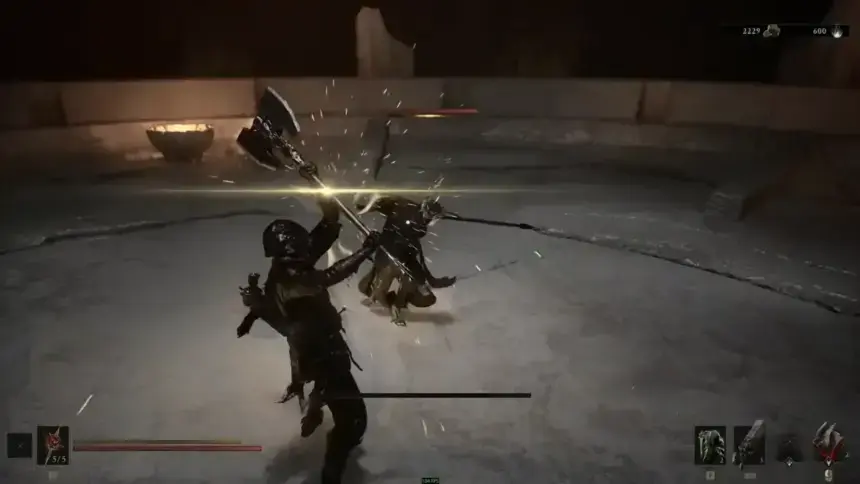
In practice, it’s a shambling, repetitive slog. Fights happen in a small number of samey arenas that limit you to place and throw wave after wave of goons at you, all more or less the same layout with the same hazards scattered about like they came from a flat-pack box. When the environmental trick is obvious, it works well enough. When it isn’t, you’re stuck sprinting in circles waiting for an enemy to drift toward the right pipe, and I’ve never felt less like the world’s greatest detective than when I’m playing tag with a bandit and hoping his pathfinding cooperates. There are some frankly baffling rules, too. You can’t blind an enemy with snuff powder until you’ve shot the armour off his shoulders first, and I still have not worked out what that’s supposed to say about Victorian physics.
The incentives are also a joke. Yes, Jon sulks in his diary if you kill people, and yes, arresting someone pays out some more cash than shooting them. But money only buys furniture for your house, newspapers, and disguises that you can rent for free anyway, so there’s nothing to chase. Unlimited pistol ammo makes headshots the path of least resistance. The one place where the game demands restraint is the optional bandit lairs, where killing anyone means instant failure because you’re there on the police’s behalf. I completed one, got a shrug for my trouble, and never went back. The good news is you can switch combat off, and there’s a chemistry minigame you can also ignore. Is it churlish to complain about something you can skip? Probably. But I wanted this game’s fights to be as clever as its cases, and they’re not even in the same postcode.
The story is a heartfelt climax, and a wobbly middle.
The critics I read split hard on the central mystery, and after finishing I get why. The question of what really happened to Sherlock’s mother, and what went on inside Stonewood Manor, is the spine of the whole adventure. The cases around it are what really shine, and the spine is the weaker bone. Mrs Holmes appears only in fleeting glimpses because we barely know her, so it’s hard to feel the weight of whatever befell her, at least until the final stretch. That late stretch is where the game lands some emotional blows that are more moving than any previous Frogwares game. I’d say that’s a fair read of the ending, if not of the journey to reach it. The payoff works. The road there is patchy.
I should also mention that the game fumbles some of its more sensitive topics. For example, there’s an early case where a trans character is repeatedly misgendered by Sherlock even after the truth comes out, and the game acts like it’s noble of him to keep that a secret. It also uses sexual assault as a lazy plot point just to force a moral choice. Further, the way it handles the search for a refugee camp relies on some pretty tired tropes, sending you straight to the first Black character you see, and there are a few lazy caricatures and some questionable disguise accents sprinkled in. None of it reads as a threat, but it’s clumsy, and it undercuts a game that otherwise works hard to feel thoughtful.
Should you play it?
If you love deduction games, then yes, you should, and you can stop reading here and go do it. The core detective loop is one of the most satisfying I’ve come across in years, a rare thing where you truly feel like you did the thinking rather than the game doing it for you. The side cases are inventive, weird and frequently better than the main plot. The relationship between Sherlock and Jon has a warmth and mischief that carries long stretches of the game on its shoulders, and the ability to be wrong, and live with it, is a design choice more mystery games should steal.
If, on the other hand, you want an open world that rewards curiosity, or combat that’s remotely fun, or a technically smooth ride on console, you’ll be disappointed. Cordona is a stage, not a sandbox. The fights are something to skip. The stutter is not something to skip, sadly, because it follows you around the island like a bad smell. And you’ll need some patience for the odd moment where the game’s refusal to point you anywhere useful tips over from “empowering” into “I’ve been standing in this square for ten minutes”.
I launched it expecting either a triumph or a trainwreck and came out with something more interesting: a flawed, ambitious, oddly lovable game that knows what it’s good at and only half remembers everything else. Frogwares isn’t afraid to swing big, and this time the swing connects more often than it whiffs. It doesn’t quite solve the case of the perfect open-world detective game, but it leaves a very promising trail of clues.