
Around my twentieth hour in Villedor, I caught myself sprinting across a wobbly plank between two rooftops, grinning like a lunatic while the memory of a conversation I’d fled a few minutes earlier still droned on in my head like a podcast I couldn’t close. That is Dying Light 2 Stay Human in a single image. Techland spent many years selling us a reactive, choice-soaked zombie epic, and what arrived is a game where the stuff you do with your legs is wonderful, the stuff you do with your ears is a chore, and the stuff you do with your save file is pray. I wanted to love it. I do, in patches, and almost all of those patches happen well above street level.
You play Aiden Caldwell, a “Pilgrim,” which in this world means a professional wanderer who ferries goods and favors between the few settlements that haven’t been chewed up yet. He’s after his lost sister Mia, whom he lost track of in childhood (following a series of traumatic medical experiments they suffered as children at the hands of a villainous doctor Waltz), and the trail leads to Villedor, a crumbling, tiered city carved up between factions who all seem to have strong opinions about who should be allowed to stand where. As a protagonist, Aiden is as close to a cardboard cutout as modern budget allowances permit. He spends roughly eighty hours acting as the city’s most gullible errand boy, nodding blankly while eccentric warlords, melodramatic barkeeps, and neurotic side-questers lecture him about municipal politics.
Along the way you get bitten, which turns out to be less of a tragedy than a recurring bill: your infection sets a countdown whenever you’re away from daylight or UV lamps, and if the timer hits zero, you shift from being a person. Everyone else in the city is in the same boat, so you must stay close to light to survive the place. I’ll give Techland full credit here, because this is the smartest thing in the game. That small timer turns every dark corridor into a negotiation. Do I loot one more drawer, or do I bail while I still have a comfortable margin? Do I creep through the basement or charge it and hope the clock forgives me? It’s the same itch you get from holding your breath underwater, and it gives the day-night cycle real teeth. Daytime is for crossing the city and doing business outdoors. Night is when the streets fill with screaming nightmares, the loot heavy interiors get their best rewards, and every decision gets a little more expensive. It works.
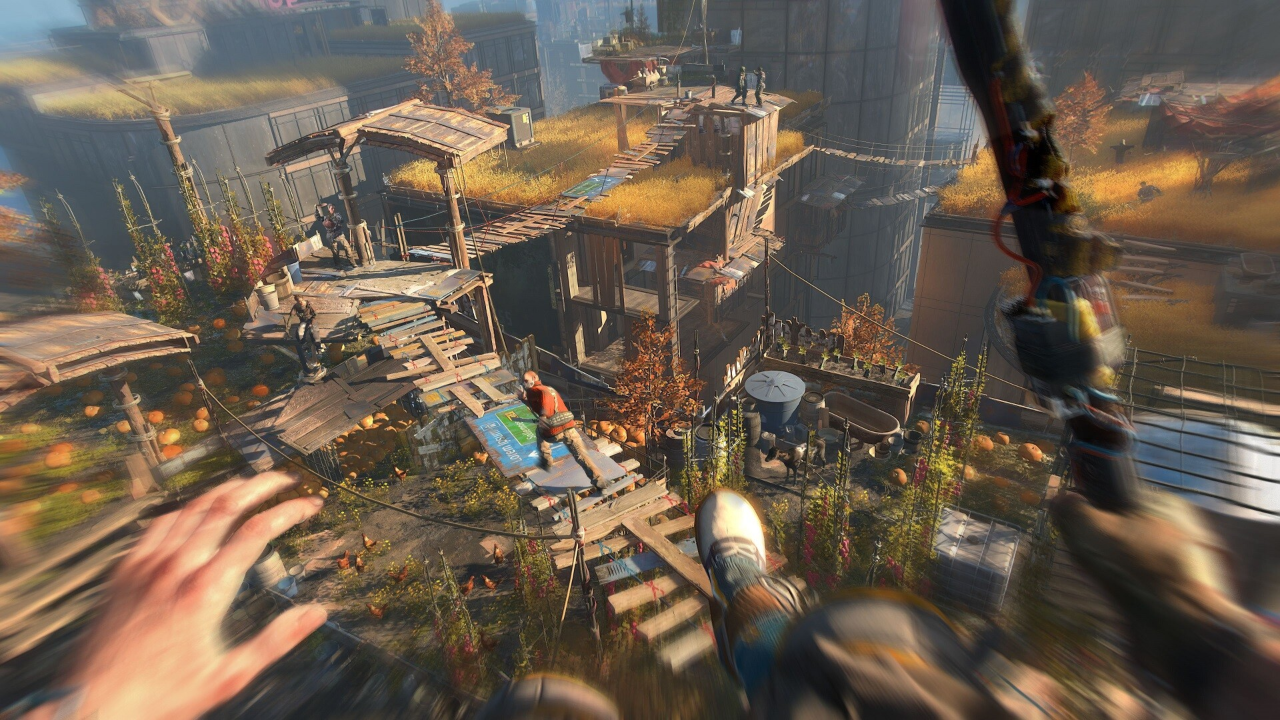
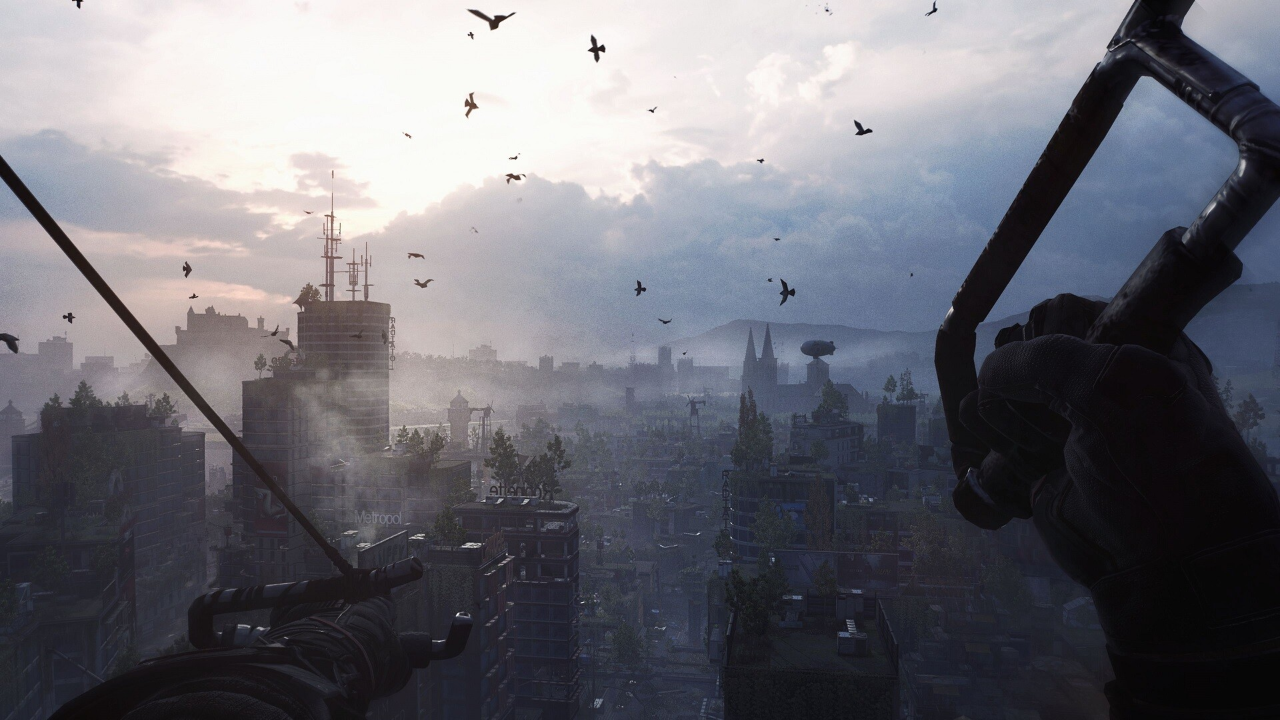
Parkour is a reason this game survives my list and why I kept booting it up after I’d sworn I was done. Moving through Villedor feels fantastic. You vault, swing, slide, wall-run and leap with a fluidity that makes most open-world traversal like wading through wet cement. A big tree of unlockable moves means you frequently acquire new ways to look cool while escaping something that wants to eat you, and the best part is that you level up your movement by simply moving, with no checklist of tedious challenges standing between you and the good stuff. Later the paraglider and grappling hook unlock, and now the skyline is a buffet. I once escaped a mob by launching off a zombie’s head like a very rude diving board. I regret nothing.
The game also sells the height beautifully. Walking a narrow beam high above the city, with the wind pushing at you and a long drop to the pavement below had me a stomach lurch. The soundtrack deserves a medal for this, as the music drops out for a beat when your feet leave the ledge and swells back when you land, which tricks your gut into feeling weightless. It’s a lovely trick, and one of the few places where the game’s sense of atmosphere beats its writing.
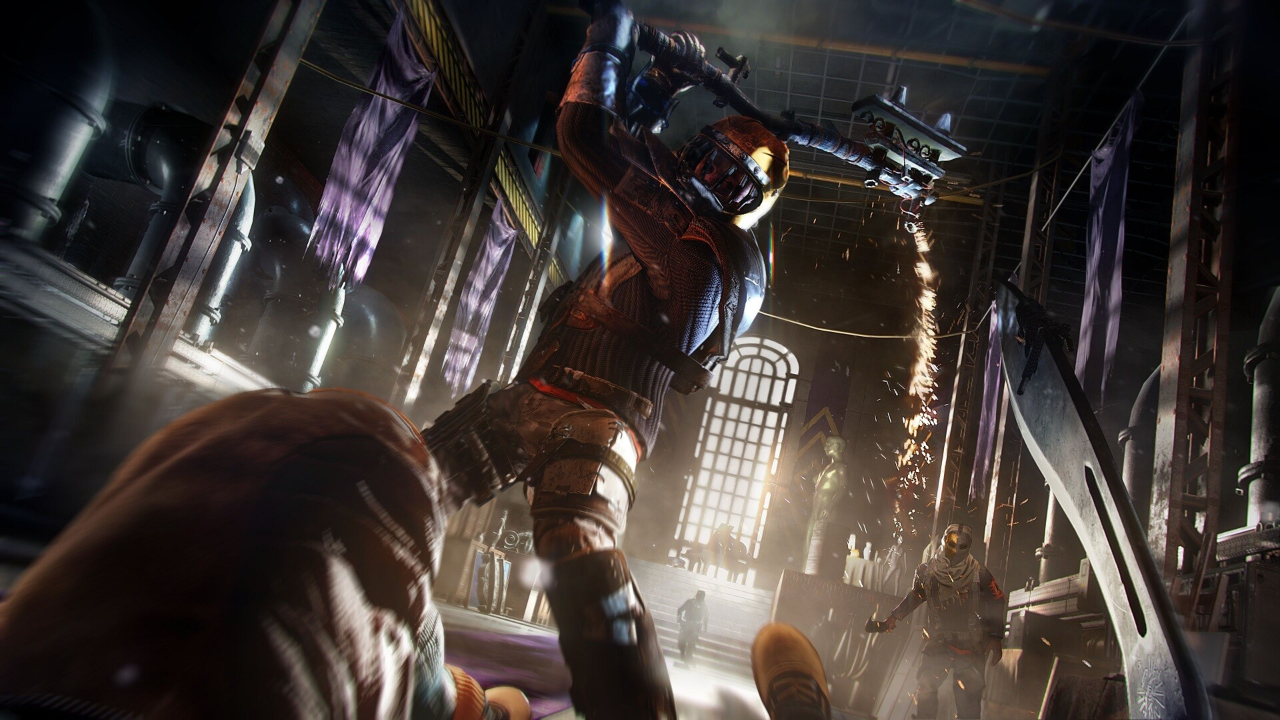
Combat lives in the second tier of the game’s strengths. Against the infected, it’s a hoot. The roster has good variety as lumbering shamblers you can mostly ignore, sprinters who lunge at you when you’re feeling smug, screamers that call every undead within earshot to your position, and a few grotesque night-time brutes who guard arenas and demand attention. A screamer in particular can wreck your evening, since the horde they summon will chase you across rooftops without any regard for physics. Weapons have a satisfying heft, there are no guns anywhere, and a single mod can turn a bent pipe into something that sets people on fire. And yes, the dropkick. The dropkick never gets old. Sending a bandit sailing off a ledge with both boots is the game’s purest joy and I will not be taking questions.
Fighting people is where the shine wears thin. Human enemies come in two flavors, scrappy grunts and slower, beefier guys with huge weapons, though with the same dance of dodge, parry, hit, repeat. The crowd AI is oddly polite, too, hanging back while one guy at a time steps up for his beating, which makes large groups more a queue at a bakery than a threat. Difficulty is just as inconsistent. Depending on how you have built your character and how much you out-leveled an area, enemies can seem pushovers one minute and bloated damage sponges the next, and I never found a setting that felt well-tuned. By the late hours, I’d stopped caring about fancy moves and just leaned on the things that worked for me.
Stealth is the sad cousin nobody invited to the party. The pitch is supposed to be Far Cry-style quiet takedowns of enemy camps, but you get a world with barely any cover to hide in, so sneaking mostly means hoping nobody turns around. It shines slightly in dark hospitals and labs, where sleeping infected and tense, quiet navigation create something close to horror, and I wish the game spent a lot more time there. At night, street-level stealth is a joke, since a single screamer will spot you from half a block away and ruin the whole plan.
For the story, Aiden is a blank with a tragic past the game drip-feeds through hazy flashbacks, and I kept waiting for a payoff that never came. His reunion driven quest asks you to care about a sister you barely know, and because the game too little bothers to show you why, Mia ends up as a plot token with a pulse. Without spoiling anything, the final act somehow manages to make this worse, topped off with a boss encounter that’s more of a stroll than a showdown. One boss fight gets recycled three times back to back with zero changes, which is the kind of thing that should have been caught in a Tuesday meeting.
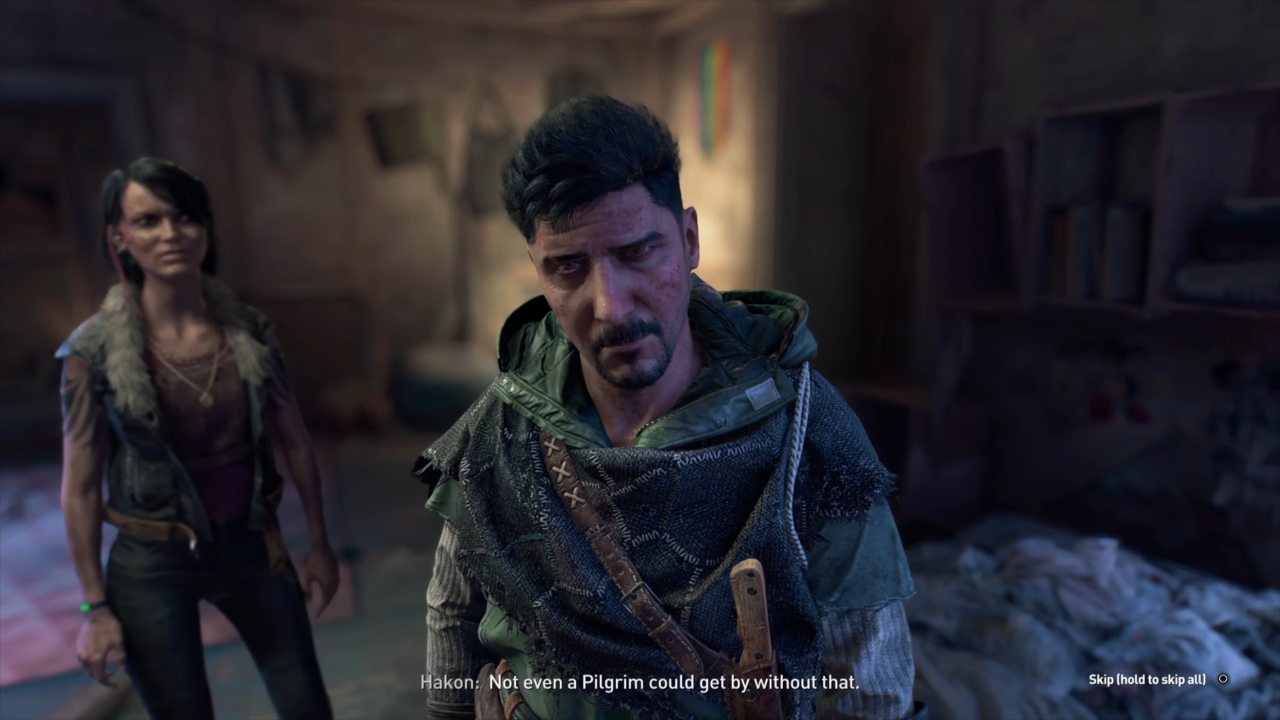
The frustrating part is how many other characters are actually terrific. Rosario Dawson’s Lawan is a moody, crossbow-wielding highlight, and there’s a gallery of weirdos, has-beens, and charmers that make the world feel inhabited. You meander from one of them to the next, collecting memorable moments, but nothing ties these moments into a decent story. It plays like a great anthology stapled to a lousy novel. And while the performances from the leads are solid, the supporting voice work varies wildly, getting worse the less important a quest is. Tone whiplash doesn’t help. One minute I’m in a bleak argument about who deserves food, the next I’m in a goofy side mission with a character who wouldn’t be out of place in a sitcom, and the writing keeps stumbling over its own attempts at being cool. One exchange about a man’s pet fish and some half-baked philosophy ran so long that I seriously considered quitting the conversation, which I never do.
Dying Light 2 spent years advertising that your decisions would reshape the city. In practice, the shape is mostly the same. You pick between two factions, spend resources to power up windmills and stations, and your choices get you different gadgets and side quests, but the same big beats arrive on schedule no matter how hard you try to burn bridges. I spent a ridiculous amount of effort making one group hate me, and I still ended up shoulder to shoulder with them later, minus the apology. A few outcomes can’t be reversed, sure, but the bigger picture is a Telltale game wearing a parkour hoodie. There’s even a tangled moral hiccup in that you’re the one deciding who gets what, with no explanation of why a wandering courier is out of sudden running the city’s supply chain. The ending, whichever you have, still lets you go back and tidy up side tasks, and there’s no New Game Plus to encourage a second run.
The side content has its own sameness issues. A lot of errands boil down to fetch this, kill that, and talk at me for five minutes. The city itself, while handsome, leans on a short list of building types, and after a while you notice the same lamp posts, the same planks between rooftops, and the same zig-zag climbing routes in the downtown zone. Even the safe-house layouts look stamped from one mold. None of it kills the fun of moving through the place, but it chips at the illusion that you’re exploring a living city instead of a very clever obstacle course. Gear and loot are in the same boat; I scooped up piles of stuff and seldom felt a reason to change what I was wearing. Crafting is supposed to be the carrot, yet I was perpetually short on materials.
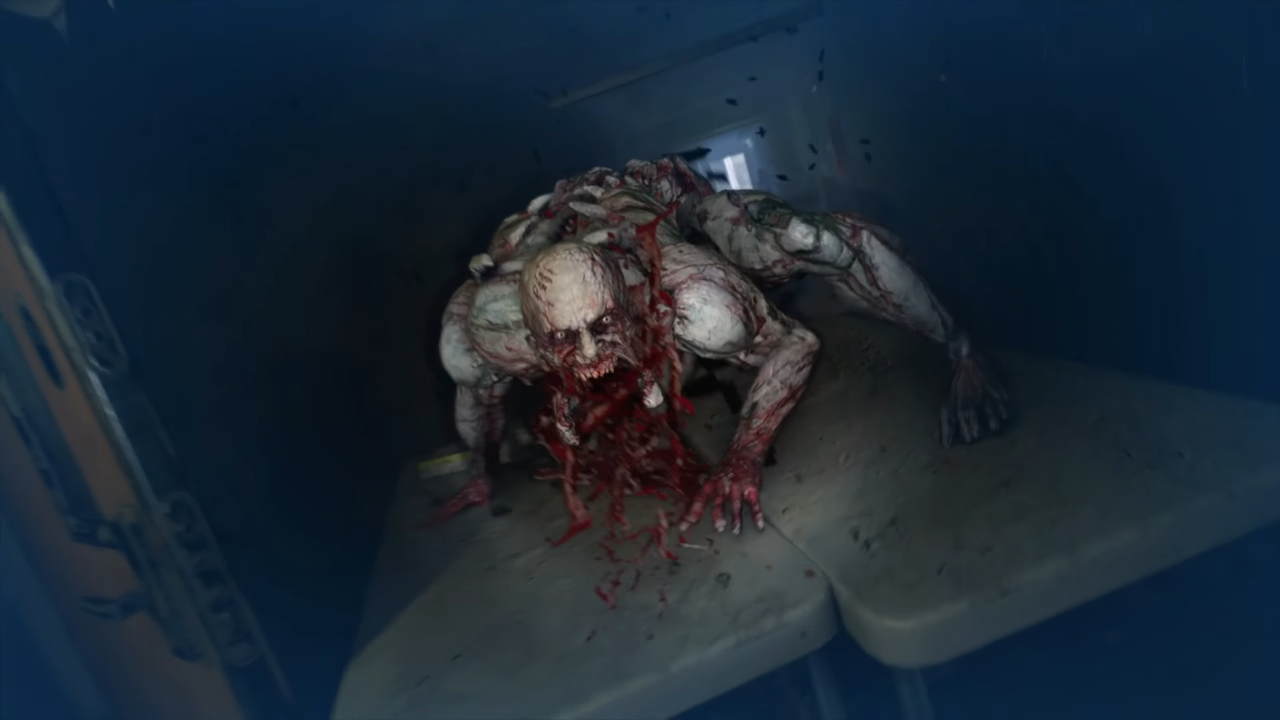
You cannot review Dying Light 2 without addressing the unmistakable aroma of Techland jank. While the game’s post-launch journey has ironed out many of the most catastrophic launch-window sins, which included corrupted save files, audio bugs that replaced dialogue with ear-piercing digital screeching, and final bosses falling through floor geometry into the void, the engine still often exhibits bizarre idiosyncrasies. NPCs will slide across the floor without moving their legs, ragdoll corpses will spasm violently against door frames, and occasionally, your grappling hook reticle will refuse to register a ledge, plunging you to the pavement through no fault of your own.
On the cooperative front, the game supports seamless four-player drop-in play, which remains one of the absolute best ways to experience Villedor. Making it out from dark zones, scaling high-tier windmills, and taking down tough GRE Anomaly minibosses alongside friends turns the experience into pure, chaotic multiplayer joy. The inclusion of individualized loot instances and dynamic level-scaling ensures there’s no squabbling over weapon drops. However, the decision to interlink world and story progression exclusively to the host’s save file is a frustration for guest players who return to their own games only to find their personal maps largely untouched. There’s no cross-platform play, and reports differ on how smoothly progress syncs back to your own world, so don’t assume your map will be tidy when you return.
Furthermore, Techland’s choice to inject microtransactions, cosmetic skins, and premium “DL Points” into a premium, predominantly single-player/co-op package leaves a different sour taste. While you can ignore the digital storefront without sacrificing your ability to slaughter the undead, seeing paid boosters and weapon packs elbowing their way into a full-priced title is an irritating modern nuisance we could have done without.
Verdict
Dying Light 2 is two games sharing a skeleton. One is a thrilling, vertigo-inducing sandbox where you leap, glide, kick, and scramble your way across a ruined city while a ticking infection timer keeps you honest. The other is a creaky, bug-ridden RPG that wants you to care about people it hasn’t earned. If you can mentally mute the cutscenes, tolerate some crashes, and spend your time on rooftops, there’s a very good game in here.
When Dying Light 2: Stay Human lets you switch off your brain, ignore its clumsy narrative pretensions, and just sprint across the evening horizon with the wind howling in your ears, it touches pure gaming ecstasy. Its vertical world design is fantastic, parkour mechanics are the best the industry has ever conceived, and its nocturnal gameplay loop gives heart-in-your-throat adrenaline. Yet, like a sprinter attempting a hurdle while weighed down by an oversized backpack, the game consistently trips over its own overstuffed ambitions. A flat protagonist, toothless storytelling choices, mediocre human combat, and lingering technical rough edges prevent it from reaching the pantheon of post-apocalyptic classics. It is a deeply flawed, occasionally brilliant sandbox, the one easiest to love when you leave its tale behind and take to the skies.