You’re going to hit a wall in Where Winds Meet right at the start if you ignore the Wind Sense skill. It’s a Mystic Art, but calling it an art feels a little grandiose for what is essentially your primary tool for interacting with the world. It does the heavy lifting for everything—exploration, stealth, tracking, stealing, even prepping for a fight. If you do not master it, Young Hero will wander blind on the map. This guide explains what Wind Sense does, how to activate it, and what its uses are in Where Winds Meet.
What is Wind Sense in Where Winds Meet

Wind Sense is a Passive Mystic Art that lets your character perceive disturbances in the air, the only way to keep your head on straight when you’re out in the field. When active, it highlights nearby points of interest, enemies, NPCs, and quest clues that are otherwise easy to overlook.
According to the in-game description, Dugu Yuan, a master of the Well of Heaven, invented the Wind Sense technique after he learned to read the wind and sound without relying on sight, and you feel that pedigree when you use it. You can sense people or things moving around through the wind and by changes in the surroundings. It works as a mental spotlight, stripping the guesswork from your surroundings and replacing it with clarity.
How to Use Wind Sense in Where Winds Meet
Wind Sense is unlocked by default immediately after the game’s intro. You can activate it with the V key on the keyboard or the right thumbstick on the controller. After that, the game enters Wind Sense mode. To cancel it, press the same button again or perform a combat action. You can use this Mystic Art freely while exploring towns, wilderness, dungeons, or quest areas.

Wind Sense Uses

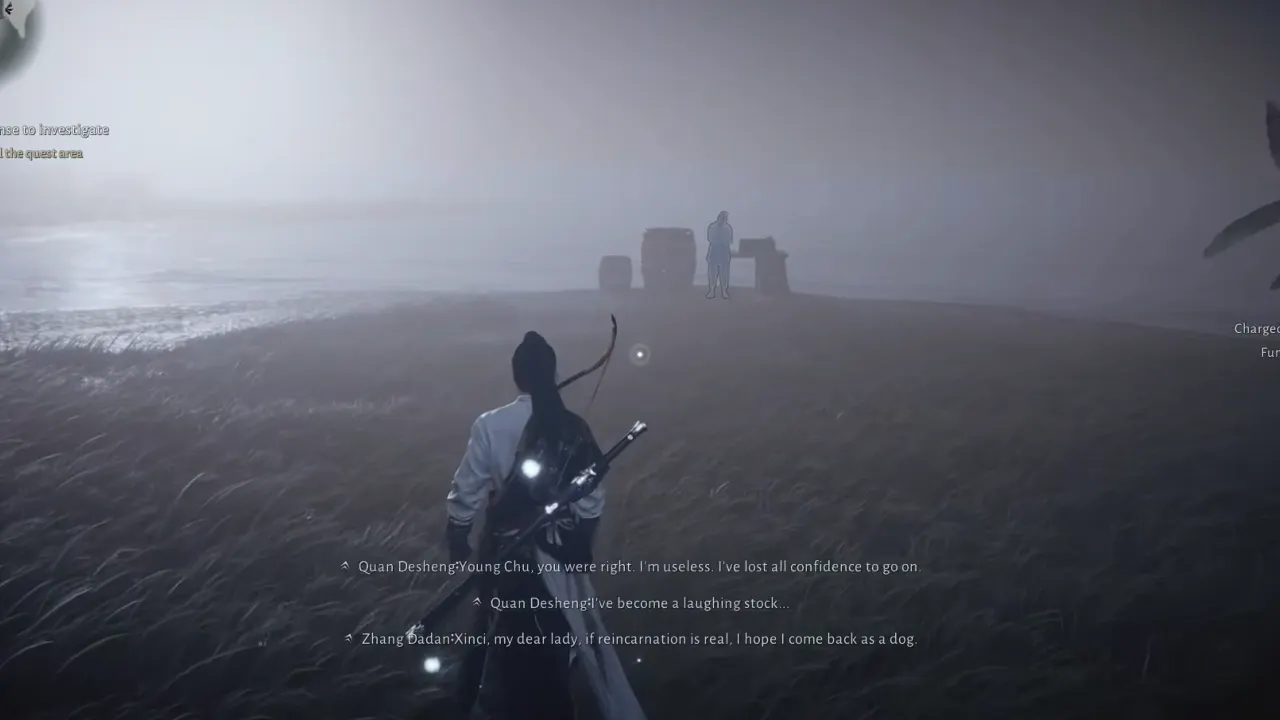
When Wind Sense is active, nearby objects of interest glow and stand out from the environment. This includes treasure chests hidden behind scenery, resources in grass, corners, or rooftops, and small interactables mixed into the environment. It’s very helpful in dense areas like Qinghe villages or Kaifeng alleys, where vertical clutter hides rewards.
These are the most common activities for which you require Wind Sense:
- Use to enter a new area or building.
- Used to start certain Healing interactions.
- Use to initiate or progress a quest objective.
- Use to see enemy positions through foliage or walls and identify their patrol routes or vision cones.
- To identify valid targets for mystic use.
- To search for small quest items or creatures.
- See what items NPCs are carrying before you can request, negotiate for, or steal them with Celestial Seize.
- It initiates Skill Theft Mystic Art.
- To find out if you think something is “missing” in the environment.
If a skill prompt won’t appear, activating Wind Sense often unlocks it.
You cannot complete many quests without Wind Sense because it needs to be used somewhere in between. For example, you need to use it to follow faint trails, highlight investigation points, track movement paths during search quests, find butterflies for Enchanting Lotus, insects, or ritual targets during events. Instead of relying on vague directions or signposts, the skill gives you clear marks. If you treat Wind Sense like a side feature rather than an active tool, the game will be slow and more confusing than it should be.